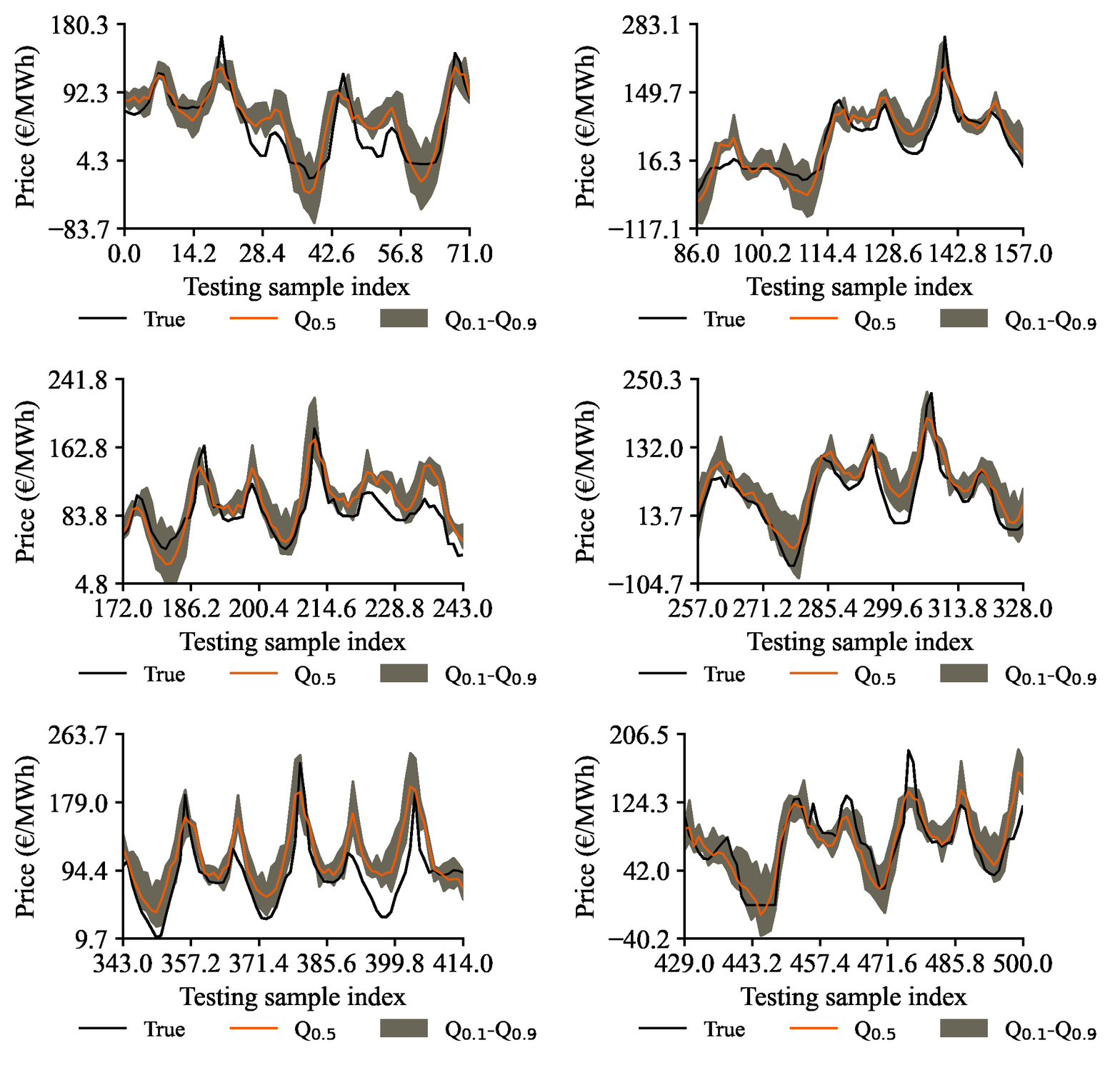
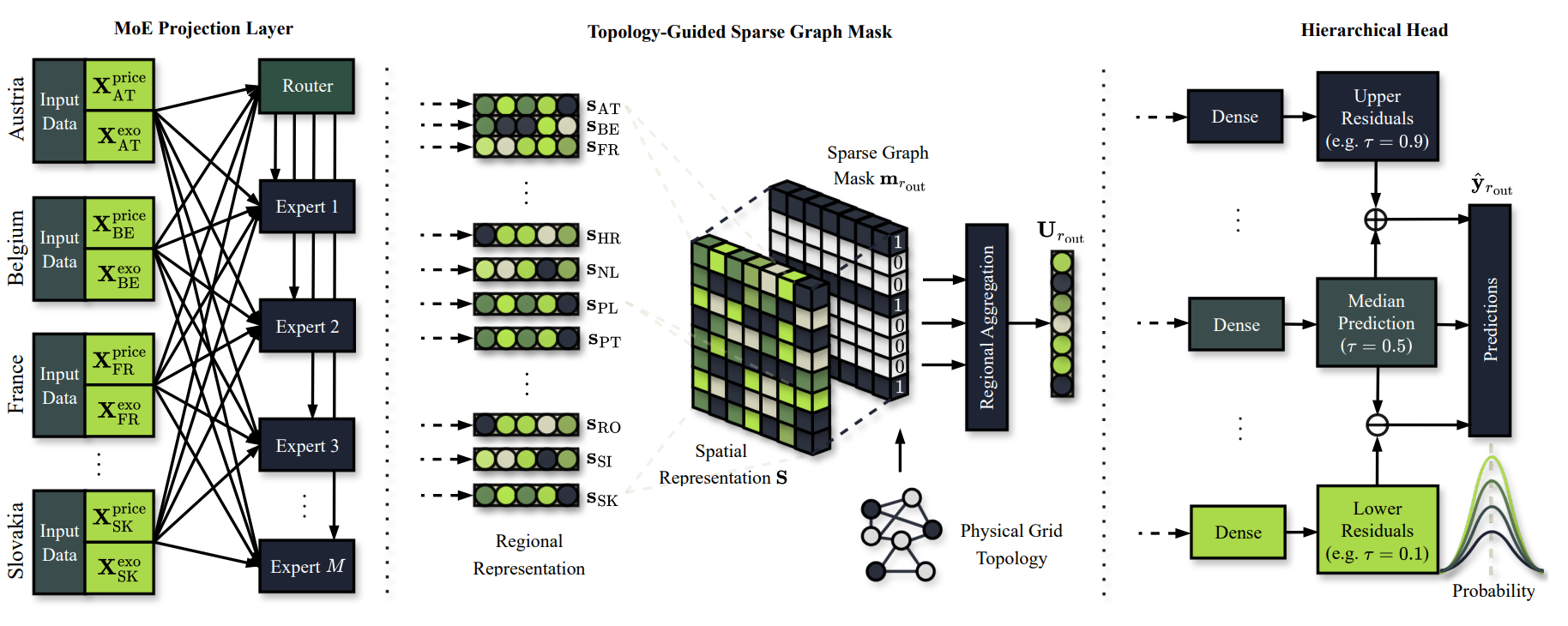
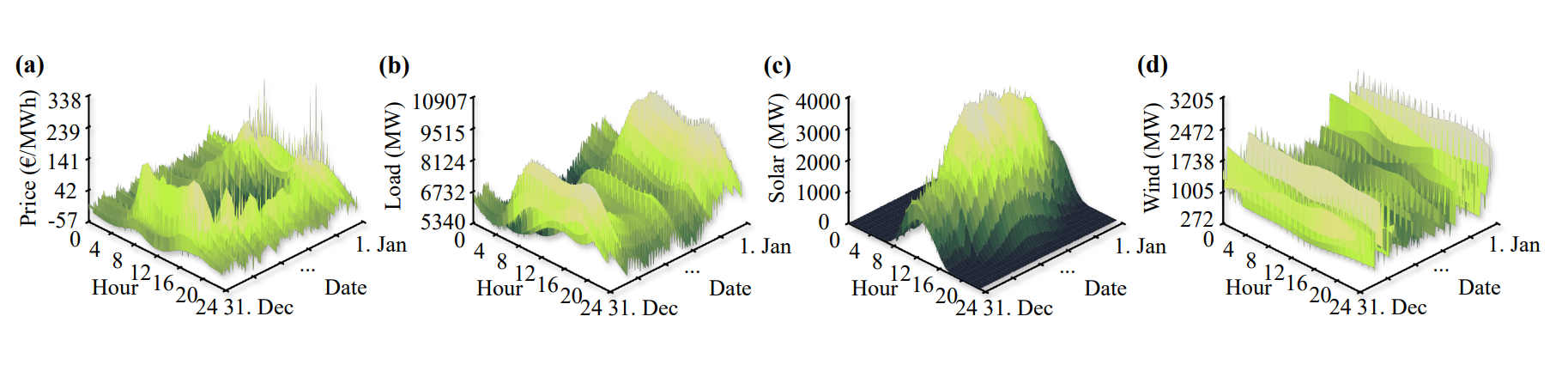
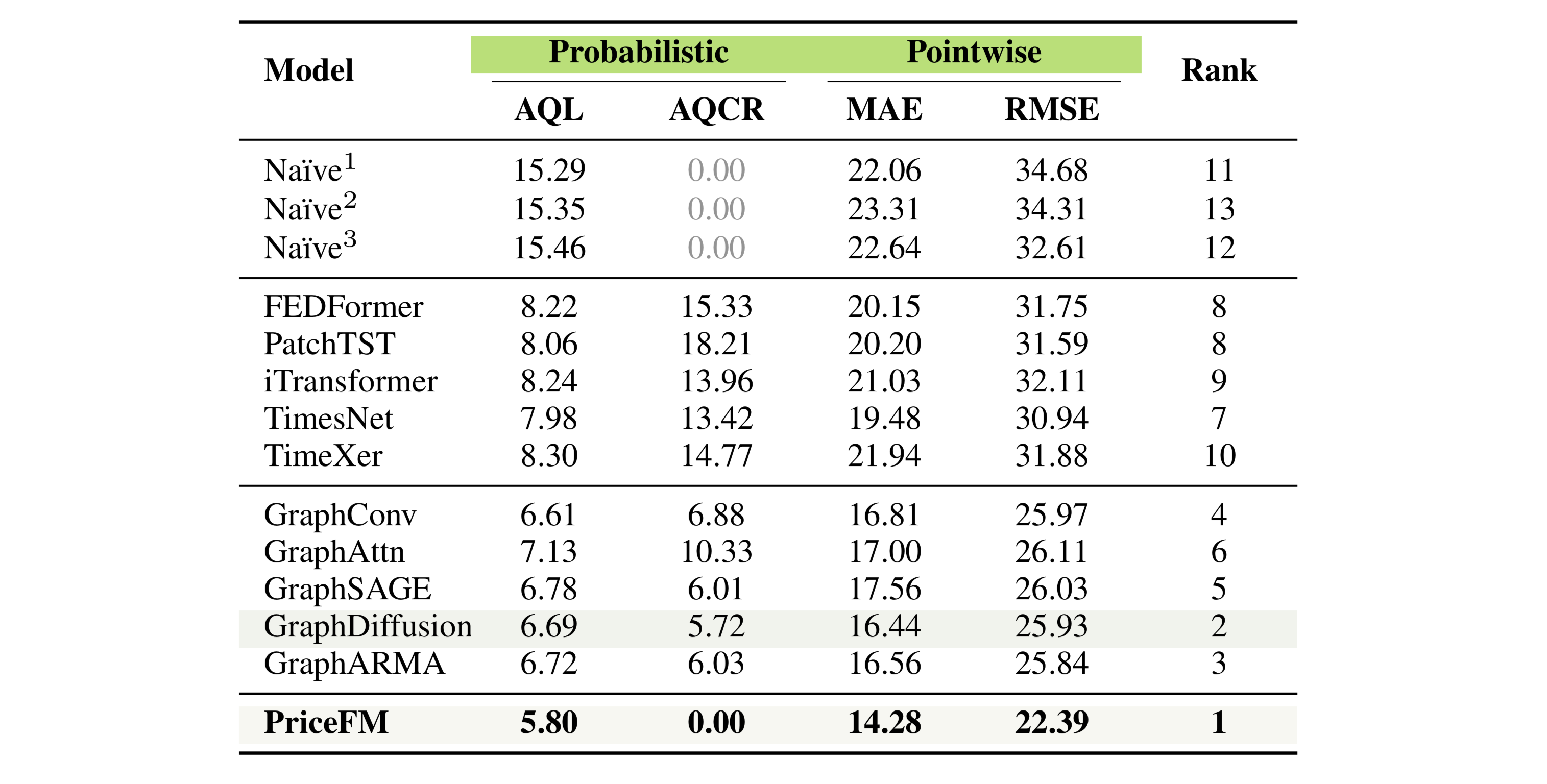
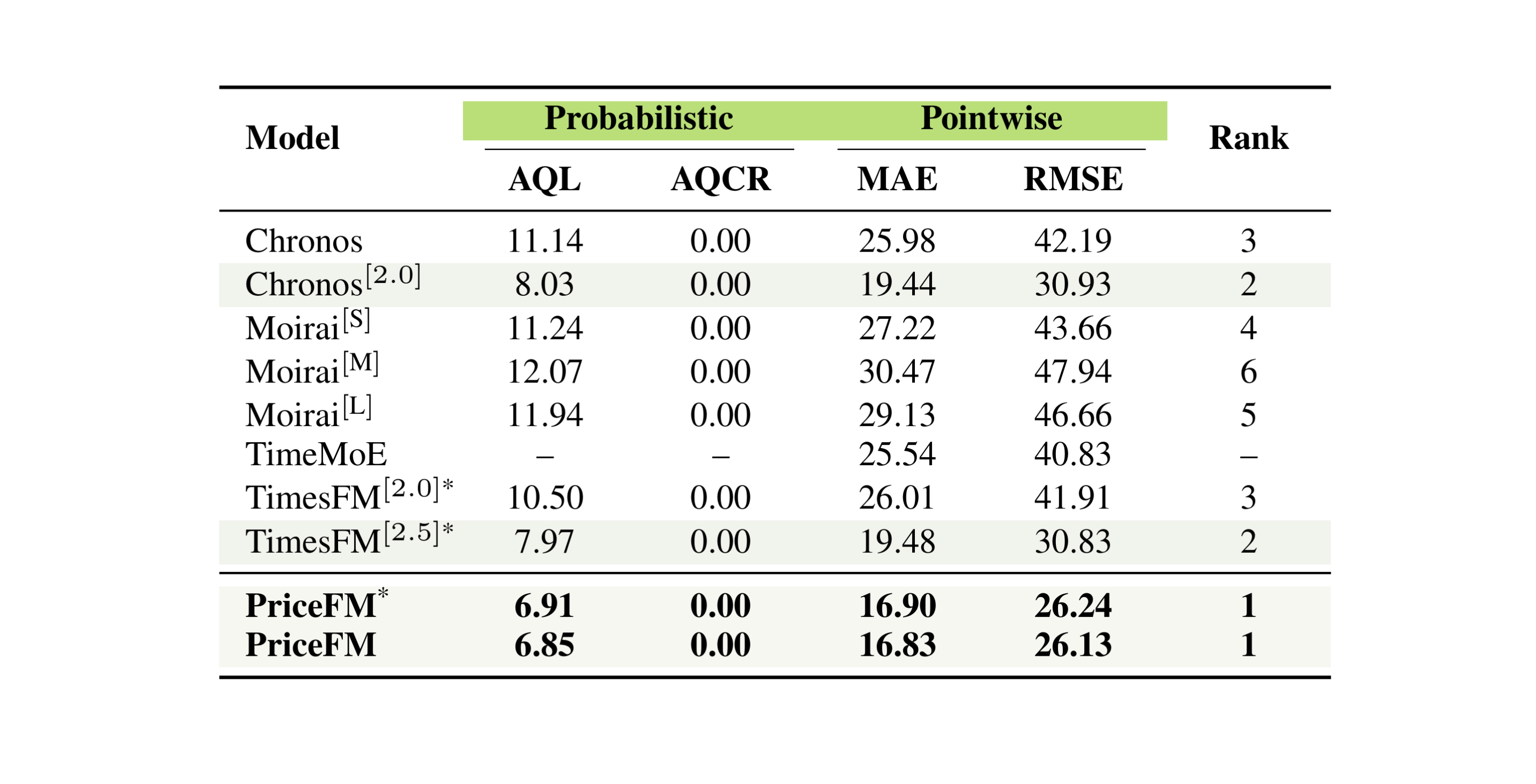
Electricity price forecasting in Europe presents unique challenges due to the continent's increasingly integrated and physically interconnected power market. While recent advances in foundation models have led to substantial improvements in general time series forecasting, most existing approaches do not incorporate prior graph knowledge from the transmission topology, which can limit their ability to exploit meaningful crossregion dependencies in interconnected power systems, motivating a domain-specific foundation model. In this paper, we address this gap by first introducing a comprehensive and up-to-date dataset across 24 European countries (38 regions), spanning from 2022-01-01 to 2026-01-01. Building on this groundwork, we propose PRICEFM, a probabilistic foundation model pretrained on this large dataset. Specifically, PRICEFM maps each region's price and exogenous features into a comparable latent embedding via a shared Mixture-of-Experts (MoE) projection layer, then injects prior graph knowledge by constructing a sparse graph mask derived from transmission topology. Across a large-scale European benchmark, PriceFM achieves strong performance and demonstrates superior generalization under both zero-shot and full-shot evaluation compared with multiple competitive baselines.
If you use our code or find our paper useful, please cite:
@misc{YuPriceFM,
      title={PriceFM: Foundation Model for Probabilistic Electricity Price Forecasting},
      author={Runyao Yu and Chenhui Gu and Jochen Stiasny and Qingsong Wen and Wasim Sarwar Dilov and Lianlian Qi and Jochen L. Cremer},
      year={2026},
      eprint={2508.04875},
      archivePrefix={arXiv},
      primaryClass={cs.CE},
      url={https://arxiv.org/abs/2508.04875},
}